 Sunreach
Places · Updated
When the sun passes behind the Eiffel Tower, seen from Trocadéro
Seen from the Trocadéro esplanade, the morning sun passes behind the Eiffel Tower every day from about 18 November 2026 to 24 January 2027 below the tower’s second floor. It is lowest on 19 December 2026 at 09:24, 4.6° up, a little above the first floor.
Sunreach is a 3D and AR sun tracker for iPhone and iPad, coming soon to the App Store. This guide describes the current app; planned upgrades are listed separately. Terrain coverage varies by location.
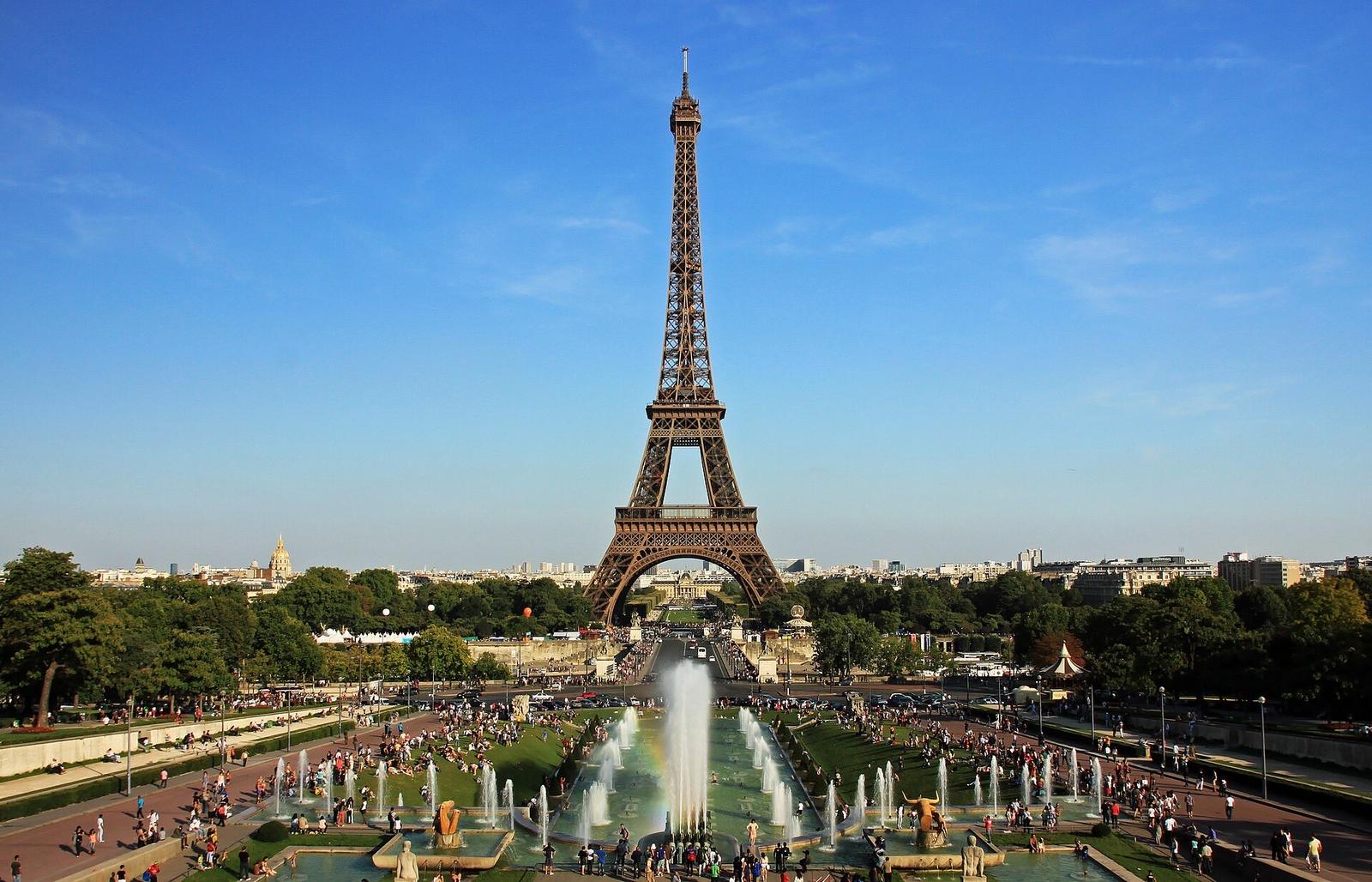
- Viewpoint
- Trocadéro esplanade, 48.8616° N, 2.2893° E
- Tower bearing
- 134° (south-east), 530 m away
- Floors seen from there
- first 3.4°, second 9.6°, top 29.8°
- Lowest pass
- 19 December 2026, 09:24, 4.6°
On which mornings is the sun behind the Eiffel Tower?
Every morning from October to February the sun crosses the tower’s bearing, but only from 18 November 2026 to 24 January 2027 is it low enough to sit inside the lattice below the second floor. From 5 December 2026 to 7 January 2027 it is under 6° up, so the light is golden.
| Date | Sun behind the tower | Sun’s height | Where on the tower | Sunrise (flat horizon) |
|---|---|---|---|---|
| 15 November 2026 | 09:24 | 10.3° | between the second floor and the top | 08:00 |
| 20 November 2026 | 09:22 | 8.9° | between the first and second floor | 08:07 |
| 1 December 2026 | 09:20 | 6.5° | between the first and second floor | 08:23 |
| 10 December 2026 | 09:21 | 5.2° | between the first and second floor | 08:33 |
| 19 December 2026 | 09:24 | 4.6° | between the first and second floor | 08:40 |
| 29 December 2026 | 09:29 | 4.9° | between the first and second floor | 08:44 |
| 5 January 2027 | 09:34 | 5.6° | between the first and second floor | 08:44 |
| 15 January 2027 | 09:42 | 7.3° | between the first and second floor | 08:39 |
| 24 January 2027 | 09:49 | 9.5° | between the first and second floor | 08:31 |
Paris time. The sun’s centre crosses the line from the middle of the esplanade to the middle of the tower. At these heights the tower is several degrees wide, so the sun stays behind part of the lattice for a good while either side of the time given; the time is when it is centred.
Why does the time hardly change in December?
Near the winter solstice the sun’s path stays almost the same from day to day. On 20 November 2026 it passes the tower at 09:22, on 1 December 2026 at 09:20, and on 29 December 2026 at 09:29.
The sun rises 45 to 75 minutes before these times, south of east, then climbs slowly toward the south. From the esplanade the tower stands at 134°, so the sun reaches it a little later and only a few degrees higher. In late January the sun rises further east and climbs faster, so it passes higher (8.4° on 20 January 2027) and you see it behind the upper half instead.
Clear mornings in Paris in December are rare, which is why a window of several weeks helps: you can pick the clearest day in it.
Sunreach computes this for any spot on Earth, from the real terrain around it. Get the app ↓
How do you plan it in Sunreach?
Drop the pin on the esplanade, open 3D, switch to eye level and aim at the tower. Alignment search then lists the days and minutes the sun lines up with it; tap one to see that minute in 3D.
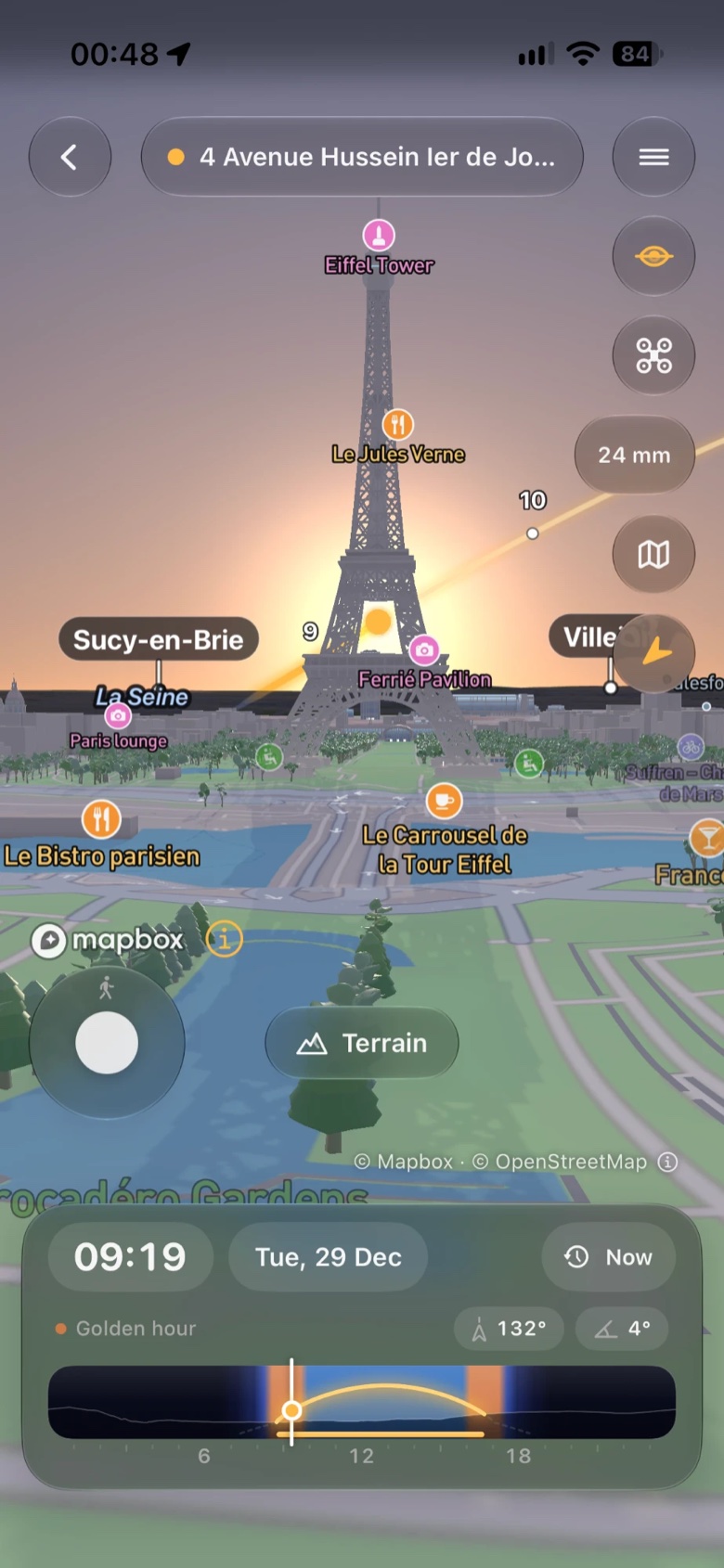
- Pick the spot. Search “Trocadéro” or hold the map on the esplanade. Where you stand changes the dates: 10 m to the side moves the tower’s bearing by about 1°.
- Open 3D and go to eye level. The city view shows the buildings and the tower with their shadows for the minute you choose. Pick a lens to frame it.
- Search the alignment. Aim at the tower and run alignment search for the sun. It returns windows like “20 Nov – 24 Jan, best 19 Dec 09:24”.
- Set an alert. One tap adds a reminder for the morning you choose.
Checking today and tomorrow is free. Other dates and alignment search are part of Sunreach Pro.
Where exactly should you stand?
Stand on the centre line of the esplanade between the two wings of the Palais de Chaillot, so the tower is symmetrical in front of you. These times are for that line; from the side terraces or the gardens below, the dates and heights shift.
The gardens below are lower, so the tower looks taller from there and the sun appears lower against it. Moving down the steps toward the Seine puts the sun higher on the tower on the same morning. The Manhattanhenge guide shows the same effect along a street.
What can these times not tell you?
They are clear-sky geometry with a flat horizon. Low cloud, haze and the rooftops behind the tower can hide the sun when it is only a few degrees up.
Before the sun clears the rooftops behind the tower it can be hidden even though it is above the horizon. On the lowest mornings, check in 3D whether the roofs on that bearing are in the way at the minute you plan. Weather forecasts for the morning matter more than any minute here.
Frequently asked questions
Is it the same every year?
Almost. The dates move by about a day and the times by a minute or two from year to year, because the calendar and the sun’s path drift slightly.
Can I see the sun set behind the tower from Trocadéro?
No. From Trocadéro the tower is to the south-east, so only the morning sun passes behind it. For an evening alignment you need a viewpoint east of the tower looking west.
Does this need the app?
No, the table above covers the centre of the esplanade. The app helps if you stand somewhere else or want another target, like the moon.
Sources
Ask AI about this article: ChatGPT · Perplexity · Claude · Google AI Mode