 Sunreach
Moon, Milky Way and eclipses
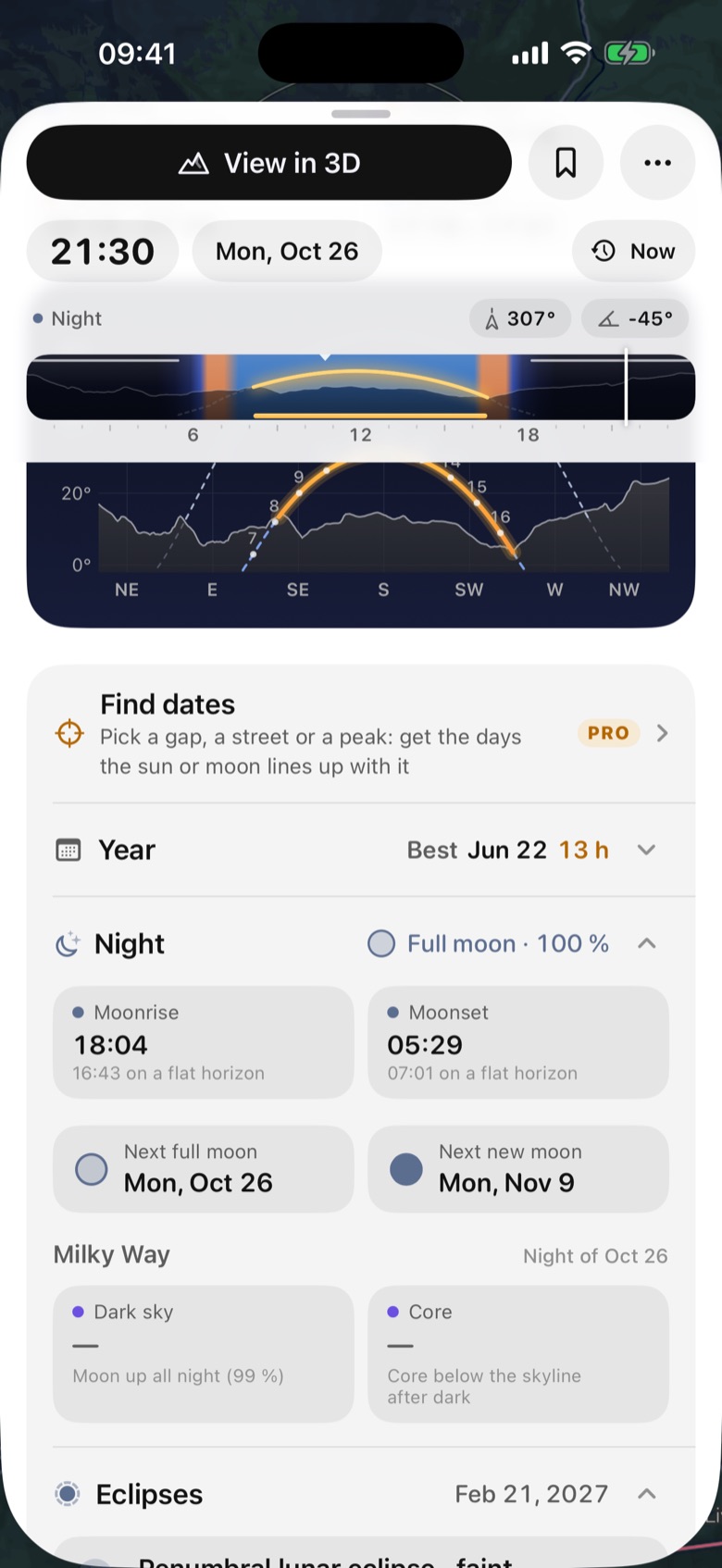
The night works like the day: the moon also has to clear the ridge. Sunreach times moonrise and moonset over the real skyline, finds the dark hours with the Milky Way core up, and lists the eclipses you will actually see from the spot.
Moonrise and moonset today are free; the moon on any date, the Milky Way and eclipses are part of Sunreach Pro.
Sunreach is coming soon to iPhone and iPad; screenshots are from the iOS Simulator, 26–27 October 2026.
What it does
The Night row shows the phase and how much of the moon is lit, Moonrise and Moonset over the terrain (with the flat-horizon time beside it when they differ), the next full and new moon, and a Milky Way block with the dark-sky time and the core’s window, height and direction.
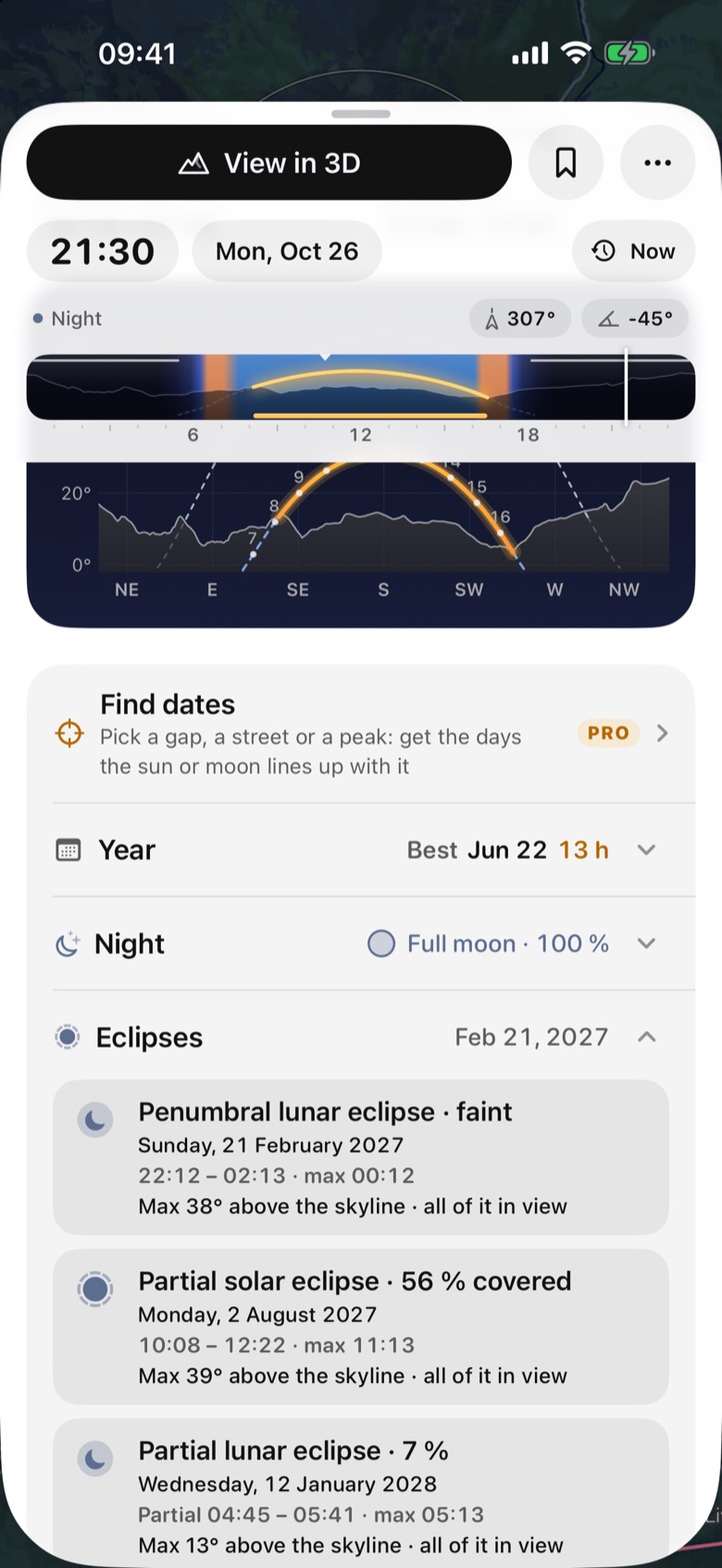
The Eclipses row lists solar and lunar eclipses visible from the spot in the next ten years, how much is covered, the times and whether the skyline hides any of it.
How it works
The moon’s position comes from a standard low-precision lunar series; the Milky Way core from its fixed sky position turned into direction and height for your spot. Dark sky means astronomical night with the moon below your skyline.
Eclipse times are computed for your exact spot, to about half a minute, and checked against NASA’s published circumstances. Very small partial solar eclipses and faint penumbral lunar eclipses are left out.
How to use it
- Open a spot and unfold Night in the plan.
- Tap a time (moonrise, moonset, the core window) to move the clock there, or tap Next full moon to jump to that day.
- Unfold Eclipses and tap one to open its day at maximum.
- In the year view, turn on Milky Way to compare nights across the season.
In the app
Tips
- A full moon rising behind a peak is an alignment: use Find dates with the moon and the “Full ±1 day” filter.
- Moon and Milky Way can be switched off in Settings > Night sky if you only plan by day.
Good to know
- Light pollution is not shown yet; a dark-sky window says when the sky could be dark, not how dark it is where you stand.